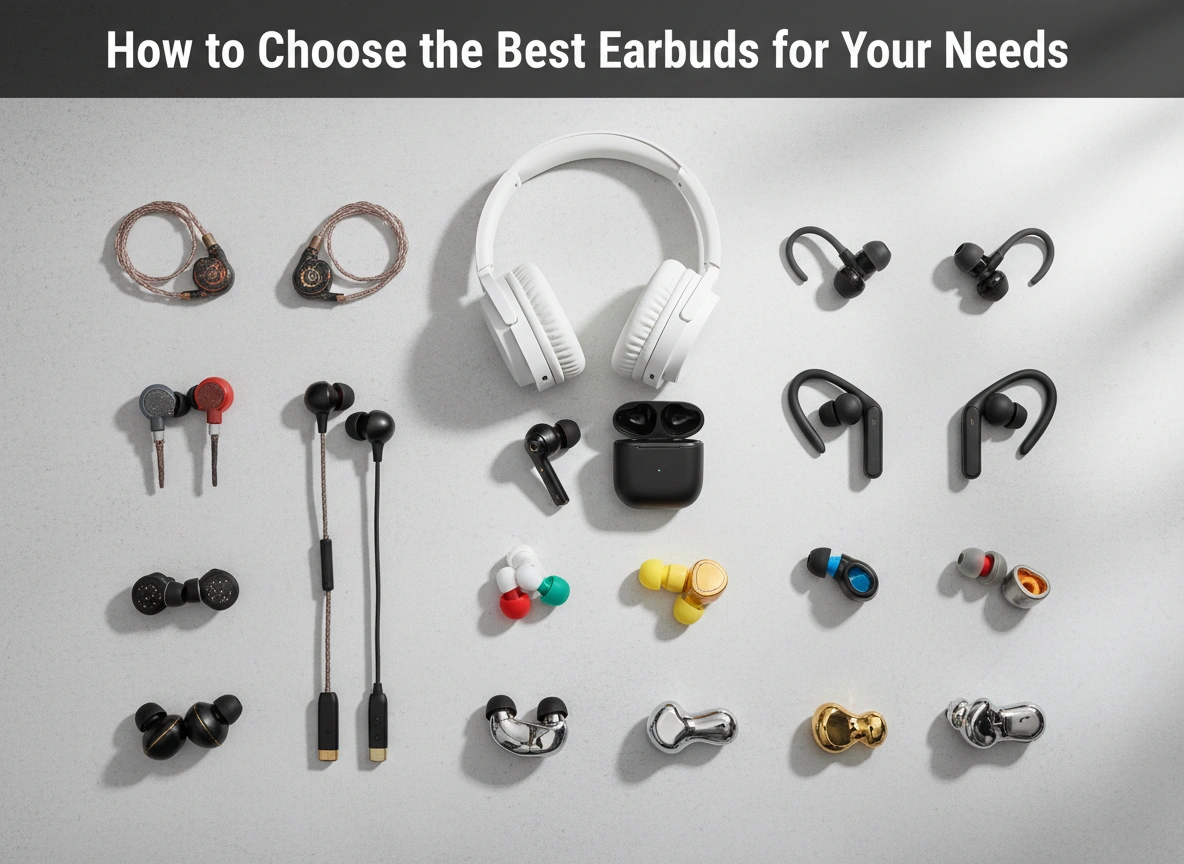
Music has evolved from a passive listening experience into a personal soundtrack that accompanies us everywhere. Whether you are commuting on a noisy train, pushing through the last mile of a marathon, or taking back-to-back conference calls, the device delivering that audio matters. Earbuds have become an essential accessory for modern life, but the market is saturated with thousands of options. From budget-friendly choices at the grocery store checkout to high-end audiophile gear costing hundreds of dollars, the sheer variety can be overwhelming.
Choosing the right pair isn’t just about picking the most expensive brand or the coolest design. It is about finding the perfect synergy between your lifestyle, your ears, and your budget. The wrong choice leads to discomfort, poor audio quality, and frustration with dead batteries. The right choice, however, can elevate your daily routine and make your favorite songs sound brand new.
This guide will walk you through everything you need to know to navigate the complex world of personal audio. We will break down the technical jargon, explore different form factors, and help you pinpoint exactly what you need.
Key Factors to Consider When Selecting Earbuds
Before you start browsing online stores, you need to establish criteria. What makes a pair of earbuds “good” is highly subjective, but several objective factors should guide your decision.
Sound Quality and Audio Profile
This is arguably the most critical factor. However, “good sound” means different things to different people.
- Bass: If you listen to hip-hop or EDM, you likely want earbuds with a strong low-end response. Look for drivers (the speakers inside the earbud) that are larger, typically around 10mm or more, though high-quality smaller drivers can also pack a punch.
- Clarity and Mids: For podcasts, classical music, or acoustic tracks, you want clear mids and highs. If the bass is too overpowering, vocals can sound muddy.
- Codecs: If you are using wireless earbuds, check the supported Bluetooth codecs. SBC is standard, but AAC (great for Apple devices) and aptX or LDAC (great for Android) offer higher quality audio transmission with less compression.
Comfort and Fit
You can have the best-sounding earbuds in the world, but if they hurt your ears after 20 minutes, they are useless.
- Ear Tips: Most earbuds rely on silicone or foam tips to create a seal in your ear canal. This seal is crucial for both comfort and bass response. Ensure the model you choose comes with multiple sizes of ear tips.
- Weight and Shape: Heavier earbuds can fall out during exercise. Some models have “wings” or ear hooks that provide extra stability for active users.
Battery Life and Charging
Nothing kills the vibe faster than a “battery low” warning.
- Playtime: Look for the playtime on a single charge. 5-6 hours is the current industry standard for true wireless buds, while some premium models offer 8-10 hours.
- Case Battery: The charging case usually provides 2-3 additional full charges. Check the total playtime (buds + case).
- Quick Charge: Many modern earbuds offer a “fast fuel” feature where 10 minutes of charging gives you 1-2 hours of playback. This is a lifesaver for forgetful chargers.
Connectivity and Features
Bluetooth technology has improved significantly. Look for Bluetooth 5.0 or higher for a stable connection and better range.
- Multipoint Connection: This allows you to connect to two devices simultaneously, like your laptop and phone. You can watch a video on your computer and seamlessly switch to a call on your phone without re-pairing.
- App Support: High-end earbuds often come with a companion app. These apps let you customize EQ settings, update firmware, and reconfigure touch controls.
Price and Brand Reputation
You generally get what you pay for, but diminishing returns kick in eventually.
- Budget ($20-$50): Functional, decent battery, acceptable sound. Great for backups or kids.
- Mid-Range ($50-$150): The sweet spot. You get active noise cancellation (ANC), good sound, and reliable connectivity.
- Premium ($150+): Top-tier ANC, spatial audio features, premium materials, and brand prestige (Sony, Bose, Apple, Sennheiser).
Understanding the Different Types of Earbuds
Not all earbuds are created equal. The form factor you choose dictates portability and isolation.
True Wireless Stereo (TWS)
These are currently the most popular type. There are absolutely no wires—not even between the two earbuds.
- Pros: Ultimate freedom of movement, portable charging cases, highly convenient.
- Cons: Easier to lose, battery life is limited by the small size, microphone quality can sometimes suffer compared to wired options.
Wireless Earbuds (Neckband Style)
These have a wire connecting the left and right buds, which usually rests behind your neck.
- Pros: Harder to lose, often have better battery life and microphone placement than TWS, great for runners who want to take buds out without holding them.
- Cons: The wire can be annoying or cause “cable noise” (microphonics) when it rubs against clothes.
Wired Earbuds (In-Ear Monitors)
The classic style that plugs directly into a headphone jack (or a dongle).
- Pros: Zero latency (perfect for gaming), no batteries required, generally better sound quality for the price since you aren’t paying for Bluetooth chips and batteries.
- Cons: Tethered to your device, cables can tangle, many modern phones lack headphone jacks.
Noise-Canceling vs. Sound Isolating
It is crucial to know the difference.
- Passive Noise Isolation: This relies on the physical seal of the ear tip blocking out noise, like an earplug.
- Active Noise Cancellation (ANC): This uses microphones to listen to outside noise and generates an “anti-noise” sound wave to cancel it out. It is excellent for airplane engines and AC hums.
- Transparency Mode: Often found with ANC, this uses microphones to pump outside sound in, so you can hear traffic or conversations without removing your buds.
Tips for Testing and Comparing Earbuds
Reading specs is one thing; experiencing the product is another. If you have the opportunity to test earbuds (or if you buy from a place with a good return policy), here is what to look for.
1. The “Shake Test”
Put the earbuds in and shake your head vigorously. Jump up and down. If they feel loose or fall out immediately, they aren’t for you. You shouldn’t have to constantly adjust them.
2. The Genre Sweep
Don’t just listen to one song. Test them with:
- Bohemian Rhapsody (Queen): Tests soundstage and separation.
- Massive Attack (Teardrop): Tests bass depth and control.
- Podcast or Audiobook: Tests vocal clarity and sibilance (those harsh ‘s’ sounds).
3. Call Quality Check
Record a voice memo on your phone or call a friend while standing near a fan or a busy street. If the other person can’t hear you over the background noise, the microphones are insufficient for business calls.
4. Latency Test
Watch a YouTube video or play a fast-paced game. Look closely at the lips of the speaker. If the audio lags behind the video, it will be incredibly annoying for media consumption.
Common Mistakes to Avoid When Buying Earbuds
Even savvy shoppers can fall into traps. Avoid these common pitfalls to ensure you don’t waste your money.
Focusing Only on Brand Name
Just because a brand is famous doesn’t mean every product they make is gold. Many lesser-known audio brands (like Anker Soundcore, 1More, or Jabra) offer features that rival top-tier competitors for half the price. Read reviews of the specific model, not just the brand.
Ignoring IP Ratings
If you plan to work out, you must check the Ingress Protection (IP) rating.
- IPX4: Splash resistant. Good for light workouts and rain.
- IPX7: Waterproof. Can handle heavy sweat and even accidental submersion.
- Buying non-rated earbuds for the gym is a recipe for device failure due to sweat corrosion.
Assuming Louder is Better
High volume does not equal high quality. Cheap earbuds often boost volume to mask distortion and lack of detail. Look for clarity and balance at moderate volumes to protect your hearing.
Overlooking the Ecosystem
While Bluetooth is universal, features aren’t. AirPods work best with iPhones (fast pairing, spatial audio). Samsung Galaxy Buds work best with Samsung phones. If you mix and match ecosystems, you might lose access to specific features like low-latency modes or voice assistant integration.
Conclusion
Selecting the best earbuds is a balance of compromises. You might trade battery life for better sound, or sacrifice active noise cancellation to get a more secure fit for running. There is no single “best” pair for everyone.
Start by defining your primary use case. Are you a commuter craving silence? An audiophile seeking fidelity? An athlete needing durability? Once you know how you will use them, prioritize the features that matter most. Remember to look beyond the marketing hype and focus on specs like battery life, driver size, and IP ratings.
By taking the time to research and understand your needs, you ensure that your investment pays off in hundreds of hours of quality listening. The right earbuds don’t just play music; they enhance your daily life, keeping you connected, entertained, and focused, no matter where the day takes you.
Please vist this website for more info