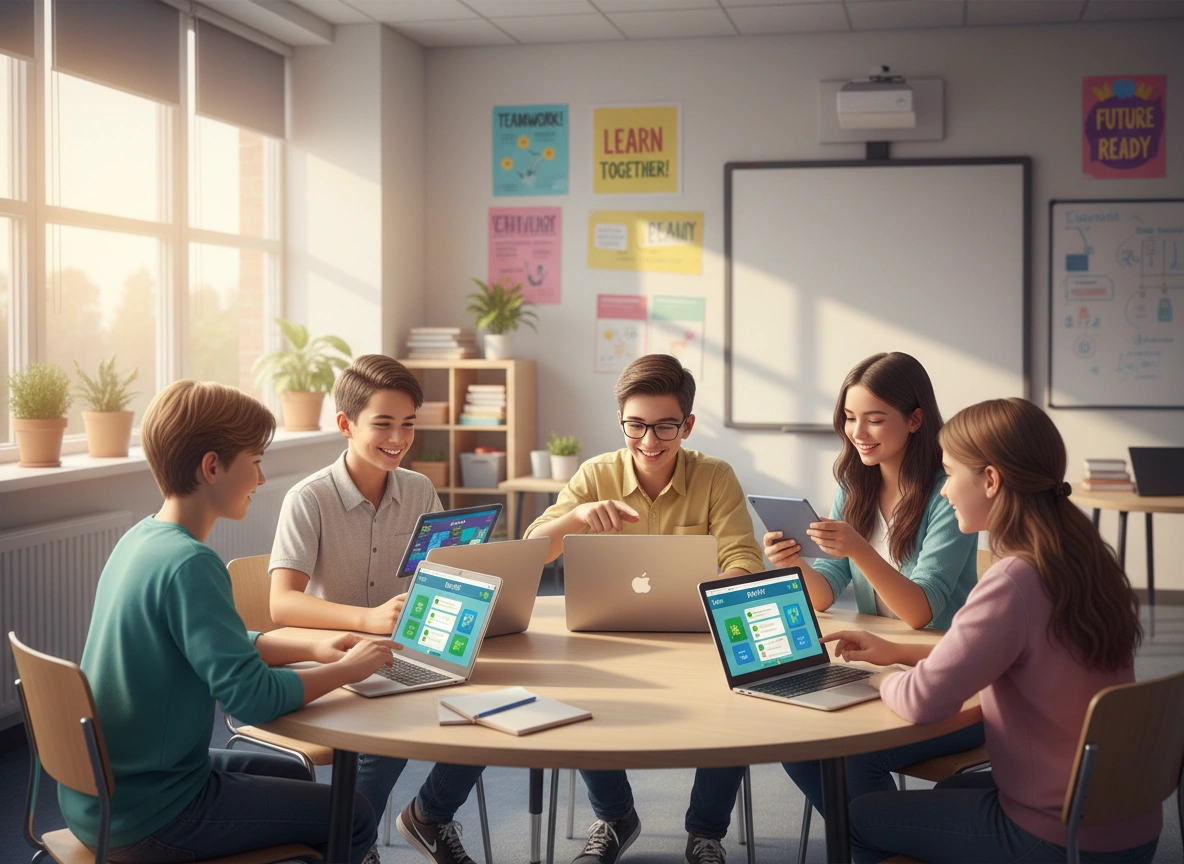
Education is constantly evolving, seeking innovative methods to enhance student engagement and deepen understanding. One of the most powerful pedagogical approaches to emerge is collaborative learning, where students work together to solve problems, complete tasks, and learn from one another. In this landscape, digital tools play a pivotal role. Gimkit, a game show-style learning platform, has distinguished itself not just as an engaging review tool but as a powerful catalyst for collaborative learning in the modern classroom. By blending gamification with strategic team-based mechanics, Gimkit creates a dynamic environment where students learn that success is a shared endeavor.
This article explores how Gimkit’s unique features promote teamwork and foster a truly collaborative classroom culture. We will examine the platform’s impact on student engagement, provide practical examples for implementation, and discuss how its design aligns with contemporary educational practices that prioritize cooperation and collective problem-solving.
Beyond Individual Scores: Gimkit’s Foundation in Team-Based Play
At its core, Gimkit reimagines the traditional quiz format. Instead of a simple question-and-answer session where students compete individually, many of its most popular game modes are inherently designed for teamwork. This shift from individual glory to collective achievement is the cornerstone of its collaborative power.
The flagship “Classic” mode can be played in teams, but it is in modes like “Trust No One” and “The Floor is Lava” that collaboration becomes essential for victory. In these modes, students are grouped into teams and must work together to achieve a common goal, whether it’s accumulating the most in-game currency, identifying an “impostor,” or strategically outlasting other teams. The platform doesn’t just place students in groups; it integrates mechanics that necessitate communication and shared strategy. For instance, teams might need to pool their earnings to purchase power-ups that benefit everyone or coordinate their answers to gain a strategic advantage. This design choice transforms a simple review session into a complex exercise in resource management, strategic planning, and group communication. Students quickly learn that their individual contributions directly impact the team’s overall success, fostering a sense of shared responsibility and mutual dependence.
Key Features That Drive Collaboration
Gimkit is not merely a group quiz; its specific features are intentionally crafted to make teamwork a natural and necessary part of the experience. These elements work together to create an environment where collaboration is not just encouraged, but required.
1. Shared Goals and Collective Resources: In team-based games, the objective is collective. Whether the goal is to reach a certain monetary target or be the last team standing, the focus is on “we,” not “me.” Students contribute their individual earnings from correct answers to a shared team bank. This simple mechanic encourages a mindset of collective ownership. A student who excels is not just earning points for themselves but is lifting the entire team. Conversely, a struggling student is supported by their teammates’ successes, reducing the anxiety often associated with individual performance. This structure promotes peer-to-peer encouragement and a shared sense of accomplishment when the team’s goal is met.
2. Strategic Power-Ups and Upgrades: Gimkit’s in-game shop is a hub of strategic decision-making. Teams must communicate to decide how to spend their collective earnings. Should they invest in a “Multiplier” to increase future earnings, or purchase a “Shield” to protect their funds from another team’s “Icer”? These decisions require discussion, negotiation, and consensus. Students must weigh short-term gains against long-term strategy, a process that mirrors real-world collaborative problem-solving. This feature turns students into a strategic council, where they must articulate their reasoning, listen to others’ perspectives, and make a collective choice that affects the entire group.
3. Roles and Specialization in Advanced Modes: Game modes like “Trust No One” introduce distinct roles that demand a higher level of collaboration. Similar to social deduction games, students must work together to gather information, analyze behavior, and identify the “impostors” who are working against them. This format encourages students to develop different skills. Some may excel at observing and reporting suspicious activity, while others may be skilled at synthesizing information to draw conclusions. It pushes them to communicate clearly and trust one another’s judgments, building essential social and analytical skills in a low-stakes, high-engagement setting.
Implementing Gimkit for Collaborative Learning: Practical Classroom Applications
The true potential of Gimkit is unlocked when teachers intentionally design activities that leverage its collaborative features. Simply starting a team game is a good first step, but with thoughtful planning, educators can foster even deeper collaboration.
A science teacher preparing for a unit test on the periodic table could use the “Humans vs. Zombies” mode. Students are divided into two large teams and must answer questions to survive or convert others. This creates a large-scale collaborative effort where stronger students are naturally incentivized to help their teammates understand difficult concepts to strengthen their team’s numbers. The shared goal of survival turns review into a dynamic, team-based mission.
In a history class studying different forms of government, a teacher could use “Team Mode” and assign each team a specific political ideology. The questions could be scenario-based, and after answering, teams could be prompted to discuss how their assigned ideology would approach a particular problem. This adds a layer of role-playing and critical thinking to the collaboration, moving beyond simple content recall.
For language arts, a teacher could use Gimkit to review vocabulary. Before the game, students could work in their teams to create a shared study guide. During the game, they can use a team chat or whiteboard to discuss tricky definitions. After the game, the teacher can facilitate a debrief where teams discuss their strategies. Which power-ups worked best? Where did their communication break down? This metacognitive reflection helps students become more aware and intentional about their collaborative processes.
The Broader Benefits: Aligning with Modern Educational Goals
The collaborative environment fostered by Gimkit aligns perfectly with the principles of 21st-century education. The modern workplace rarely values isolated genius; it prizes individuals who can communicate, cooperate, and innovate as part of a team. By participating in Gimkit’s team-based games, students are practicing these essential skills in a context they find genuinely enjoyable.
The benefits extend beyond workforce readiness. Collaborative learning has been shown to improve academic outcomes, increase student retention of information, and enhance self-esteem. When students work together in a Gimkit game, they are engaged in peer tutoring without even realizing it. A student who understands a concept can explain it to a teammate in a different way than a teacher might, leading to moments of genuine insight. This process reinforces the knowledge for the “tutor” and provides targeted support for the learner.
Furthermore, the game-based format lowers the stakes and reduces the fear of failure. In a traditional setting, answering a question incorrectly can be a source of embarrassment. In Gimkit, a wrong answer is a minor setback for the team, quickly overcome by the next correct one. This creates a psychologically safe environment where students are more willing to take risks, ask for help, and contribute to group discussions.
Conclusion: More Than Just a Game
Gimkit’s success in the classroom stems from its clever understanding of student motivation and modern pedagogical needs. It channels the natural appeal of games into a structured learning experience that makes collaboration the key to success. By designing modes that require shared resources, strategic communication, and collective goals, Gimkit effectively transforms content review from a solitary chore into an exciting team sport.
For educators seeking to cultivate a more collaborative and engaging learning environment, Gimkit offers a versatile and powerful tool. It provides a space where students learn academic content while simultaneously developing the critical social and emotional skills they will need for a lifetime of learning and working with others. It proves that when learning is framed as a shared adventure, students are not only more motivated to participate but are also better equipped to succeed, both as individuals and as members of a team.
Please visit this website for more info.