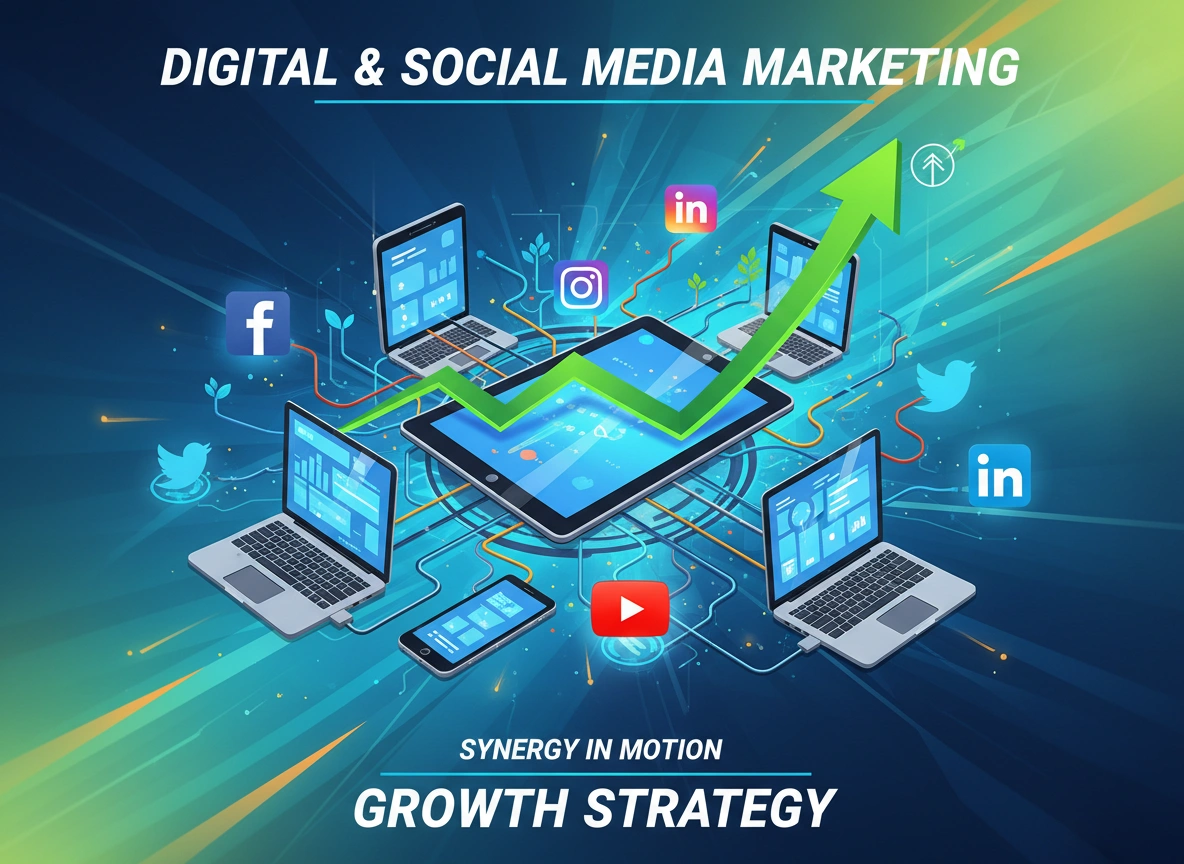
Digital marketing is a vast and powerful landscape. It encompasses every marketing effort that uses an electronic device or the internet. Within this expansive domain, social media marketing has carved out its own essential niche. While some may see them as separate entities, the real power lies in their integration. Combining broader digital marketing strategies with a focused social media approach creates a synergy that can accelerate business growth, enhance brand presence, and foster deep customer loyalty.
This article explores the powerful partnership between digital and social media marketing. We will examine their individual strengths, demonstrate how they complement each other, and provide actionable insights to help you leverage this duo for maximum impact. By understanding how these two forces work together, you can build a more cohesive and effective marketing engine for your business.
Understanding the Core Components
To appreciate their synergy, we must first understand their individual roles. Digital marketing is the umbrella term, while social media marketing is a specialized component with a unique function.
What is Digital Marketing?
Digital marketing refers to all online marketing activities. It’s a broad field that includes a variety of channels and tactics aimed at reaching customers through digital means. The primary goal is to generate leads, drive traffic, and increase sales.
Key channels within digital marketing include:
- Search Engine Optimization (SEO): This is the practice of optimizing your website and content to rank higher in search engine results pages (SERPs). Good SEO makes your business more visible to people actively searching for your products or services.
- Content Marketing: This involves creating and distributing valuable, relevant, and consistent content to attract and retain a clearly defined audience. Formats include blog posts, videos, ebooks, and infographics. The goal is to establish authority and build trust.
- Email Marketing: A direct line of communication with your audience, email marketing is used to nurture leads, share updates, promote offers, and build relationships. It remains one of the channels with the highest return on investment.
- Pay-Per-Click (PPC) Advertising: This model involves paying a fee each time one of your ads is clicked. The most common form is search engine advertising (like Google Ads), which allows you to place ads in a search engine’s sponsored links.
What is Social Media Marketing?
Social media marketing is the use of social media platforms to connect with your audience, build your brand, increase sales, and drive website traffic. This involves creating tailored content for each platform, engaging with followers, running social media ads, and analyzing your results.
The key functions of social media marketing are:
- Brand Awareness: Social media platforms are powerful tools for introducing your brand to new audiences. Viral posts, shares, and targeted ads can significantly increase your visibility.
- Community Building: Unlike more passive digital channels, social media fosters two-way conversations. It allows businesses to build a community of loyal followers and advocates around their brand.
- Customer Engagement: Businesses can interact directly with customers, answer questions, and gather feedback in real-time. This level of engagement builds stronger, more personal relationships.
- Social Proof and Trust: Positive reviews, user-generated content, and high follower counts act as social proof, building credibility and trust with potential customers.
The Synergy: How They Work Together
Digital and social media marketing are not an “either/or” choice. They are two sides of the same coin, each amplifying the effectiveness of the other. When integrated, they create a comprehensive marketing strategy that covers the entire customer journey, from awareness to advocacy.
Driving Traffic and Enhancing SEO
One of the most direct ways social media supports digital marketing is by driving traffic to your website. Every time you share a link to your latest blog post, product page, or landing page on social media, you create a new pathway for users to discover your site.
While social signals (likes, shares, comments) are not a direct ranking factor for Google, they have an indirect impact on SEO. Increased traffic from social media to your website signals to search engines that your content is valuable and engaging. Furthermore, when your content is shared widely on social platforms, it increases the likelihood that other websites and bloggers will see it and link back to it, generating valuable backlinks that directly boost your SEO.
Actionable Insight: Always include links to your website in your social media profiles and posts. Use compelling calls-to-action (CTAs) that encourage followers to click through to read a blog post, download a resource, or check out a new product.
Amplifying Content Marketing Efforts
You can spend hours creating the perfect blog post or a detailed guide, but it delivers no value if no one sees it. Social media is the perfect distribution channel for your content marketing efforts. It allows you to share your content with a built-in audience of followers who are already interested in your brand.
Different platforms can be used to promote content in various formats. For example:
- LinkedIn: Ideal for sharing long-form articles, industry insights, and professional case studies.
- Instagram: Perfect for visually promoting content through compelling images, infographics, and short video clips (Reels).
- X (formerly Twitter): Excellent for sharing quick snippets, links to blog posts, and engaging in conversations around your content’s topic.
- Facebook: A versatile platform for sharing a mix of content types, from videos and articles to company news and events.
Actionable Insight: Repurpose your pillar content for different social media platforms. Turn a blog post into a series of tweets, an infographic for Instagram, or a short video script. This extends the life of your content and reaches a wider audience.
Gathering Audience Insights for Better Targeting
Social media is a goldmine of audience data. Through native analytics tools on platforms like Facebook and Instagram, you can gain deep insights into your audience’s demographics, interests, and online behavior. You learn what content resonates with them, what questions they have, and what pain points they face.
This data is invaluable for refining all your digital marketing campaigns. The insights gathered from social media can inform your keyword strategy for SEO, the topics you cover in your content marketing, and the messaging you use in your email newsletters and PPC ads. If you notice a particular topic is trending among your social media audience, you can create a blog post or run a Google Ads campaign targeting related keywords.
Actionable Insight: Regularly review your social media analytics. Pay attention to the posts with the highest engagement. Use social listening tools to monitor conversations about your brand and industry to identify emerging trends and customer needs.
Building a Cohesive Customer Journey
Integrating social media into your digital marketing funnel creates a seamless experience for the customer. Imagine a potential customer first discovers your brand through a targeted Facebook ad (Social Media). Intrigued, they click through to your website and read a blog post (Content Marketing). They find the content so useful that they subscribe to your newsletter (Email Marketing).
Over the next few weeks, they receive valuable emails from you and see more of your content in their social feeds. When they are finally ready to make a purchase, they search for your brand on Google and easily find your website thanks to your strong SEO. This entire journey was made possible by the coordinated efforts of your social and digital marketing channels.
Actionable Insight: Map out your customer journey and identify touchpoints where social media can support other channels. Use retargeting ads on social media to re-engage website visitors who didn’t convert on their first visit.
Conclusion: A Partnership for Sustainable Growth
Digital marketing and social media marketing are not rivals competing for your budget; they are essential partners in a modern growth strategy. Digital marketing builds the foundational structure with SEO, content, and email, while social media provides the pulse, driving engagement, community, and real-time feedback.
By leveraging their combined strengths, you can create a powerful marketing flywheel. Social media amplifies your content and drives traffic, which boosts your SEO. The data from social media refines your targeting across all channels, improving your ROI. This integrated approach ensures your message is consistent, your reach is maximized, and your relationship with customers is strengthened at every touchpoint. To unlock true growth potential, stop treating them as separate functions and start building a unified strategy that harnesses the power of this perfect duo.