You use edge computing every day, even if you have never heard the term. It powers your smart speaker, speeds up your favorite games, and keeps your video calls smooth. Yet most people have no idea what it actually does.
The good news? You do not need a computer science degree to understand it. This guide breaks down edge computing in plain language, shows how it touches your daily life, and gives you practical takeaways you can actually use.
What Is Edge Computing, Really?
Let’s start with a simple picture. For years, most of our data traveled long distances. When you asked a smart assistant a question or streamed a movie, that request often shot across the internet to a massive data center hundreds or thousands of miles away. The data center processed it, then sent the answer back to your device.
That round trip takes time. Not much time, but enough to cause delays that add up.
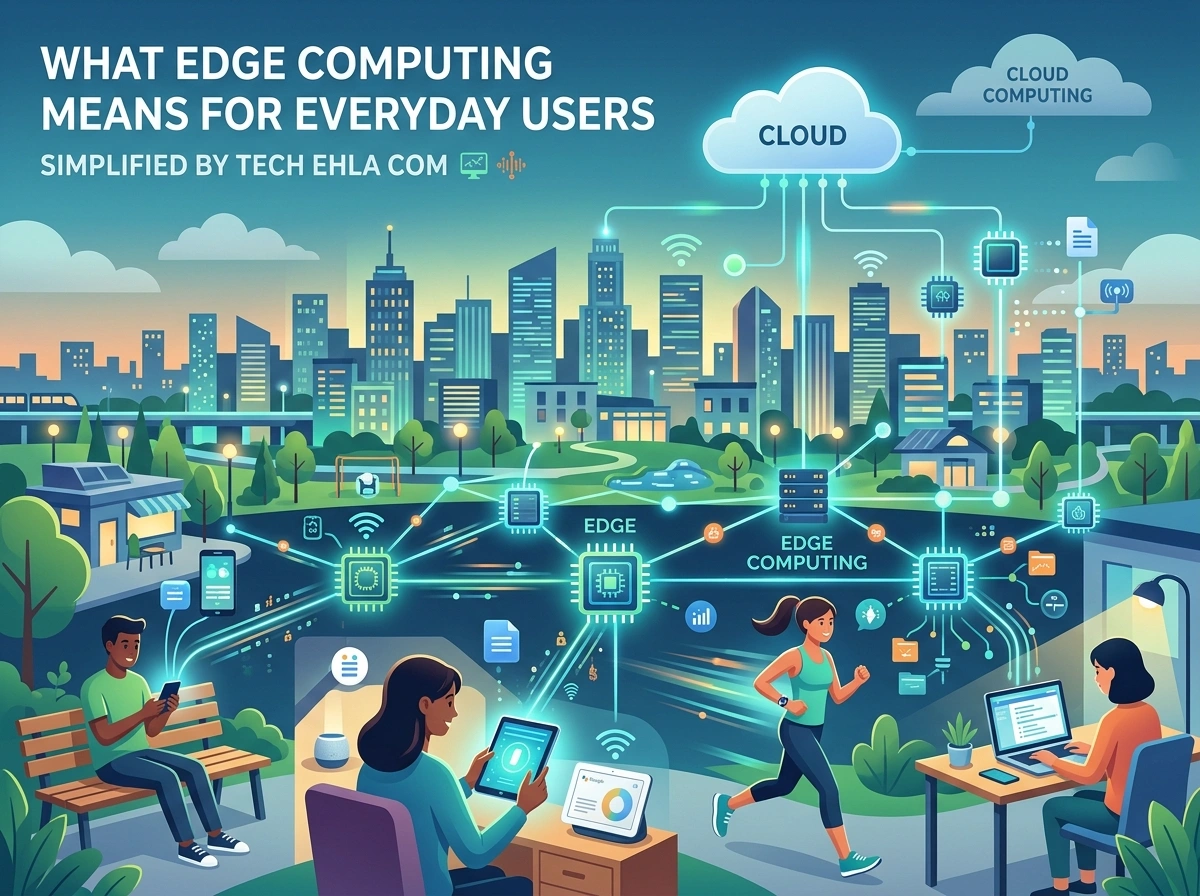
Edge computing flips this idea. Instead of sending everything to a faraway data center, it processes data much closer to where it is created — at the “edge” of the network. That edge might be your phone, a nearby server, a smart home hub, or a small local data center in your city.
Think of it like this: if you need a cup of sugar, you would rather borrow it from a neighbor than drive to a store across town. Edge computing brings the “store” right next door.
The Core Idea in One Sentence
Edge computing processes data near its source, so tasks finish faster and rely less on distant servers.
How Does Edge Computing Actually Work?
Here is the process, simplified.
- Data is created. Your smartwatch tracks your heart rate. Your doorbell camera spots movement. Your car sensor reads road conditions.
- Data is processed nearby. Instead of shipping everything to the cloud, a local device or nearby server handles the important parts right away.
- Only key information travels further. The system sends just the useful bits to the cloud for storage or deeper analysis.
This split approach saves time and bandwidth. Your device gets instant answers for urgent tasks, while less time-sensitive work still happens in the cloud when needed.
Sites like tech ehla com regularly explore how these behind-the-scenes systems shape the gadgets and services we rely on.
Why Edge Computing Matters to You
You might wonder why any of this should matter in your day-to-day life. It comes down to three things everyone cares about: speed, privacy, and reliability.
Faster Response Times
When data travels a shorter distance, results come back quicker. This “low latency” is the difference between a laggy video call and a crisp one, or a game that freezes versus one that reacts instantly.
Better Privacy
Processing data locally means sensitive information does not always need to leave your device. Your fitness stats or home camera footage can stay closer to home, which reduces exposure and gives you more control.
More Reliability
Ever had an app stop working because the internet dropped? Edge computing helps here too. Since some processing happens locally, certain features keep running even when your connection is spotty.
Edge Computing in Your Everyday Life
Let’s move from theory to reality. Here is how edge computing already shows up in the things you use.
Smart Homes and Devices
Your smart thermostat, lights, and voice assistants often make quick decisions on their own. When you say “turn off the lights,” a local hub can act almost instantly instead of waiting on a distant server. That snappy response is edge computing in action.
Security cameras are another great example. Modern cameras can detect a person versus a passing car right on the device, then alert you only when it matters. This saves storage, reduces false alarms, and protects your footage.
Streaming and Entertainment
Streaming services use edge servers placed in cities around the world. When you press play, the video often loads from a server close to you rather than one across the globe. That is why your shows start quickly and buffer less.
The same idea keeps live sports and concerts flowing smoothly to millions of viewers at once.
Gaming
Gamers feel every millisecond. Cloud gaming platforms rely on edge servers to cut lag so your button presses register instantly. Without edge computing, competitive online gaming would feel sluggish and frustrating.
Healthcare
This is where edge computing can truly change lives. Wearable devices monitor heart rhythms, blood sugar, and other vital signs in real time. Because they process data on the spot, they can warn you or your doctor the moment something looks wrong — no waiting for a cloud round trip.
In hospitals, edge systems help monitoring equipment respond faster, which can matter during critical moments.
Transportation
Modern cars carry sensors that scan the road constantly. Self-driving and driver-assist features need to react in split seconds to avoid accidents. Sending that data to a distant server first would be far too slow. Edge computing lets the car “think” locally and act immediately.
Retail and Shopping
Ever used a self-checkout that instantly recognizes items, or seen personalized offers pop up in a store app? Many of these features run on edge systems that process information right where you shop.
Edge Computing vs. Cloud Computing
People often confuse the two, so let’s clear it up.
Cloud computing is powerful but centralized. It shines at storing huge amounts of data and running heavy analysis. The trade-off is distance and the delays that come with it.
Edge computing is local and fast. It handles urgent tasks close to you but has less raw power than a giant data center.
The truth is, they work best together. Edge handles quick, time-sensitive jobs. The cloud handles storage, backups, and deep number-crunching. This partnership gives you the best of both worlds.
Common Myths About Edge Computing
Let’s bust a few misunderstandings.
“It replaces the cloud.” No. It complements the cloud rather than replacing it.
“It’s only for big companies.” Not true. If you own a smartphone or smart speaker, you already benefit from it.
“It’s too complex to matter to me.” The technology is complex, but its effects are simple: faster, safer, more reliable experiences.
Practical Takeaways for Everyday Users
You do not need to manage edge computing yourself, but a few habits help you make the most of it.
- Choose smart devices with local processing. Cameras and assistants that handle tasks on-device often respond faster and protect your privacy better.
- Check privacy settings. Look for options that keep data on your device instead of always uploading it.
- Update your gadgets. Firmware updates often improve local processing and security.
- Invest in a solid home network. A good router and hub help edge-enabled devices perform at their best.
- Stay curious. The more you understand these tools, the smarter your buying decisions become.
What the Future Holds
Edge computing is growing fast. As more devices connect to the internet — from doorbells to delivery drones — the demand for quick, local processing will only rise.
The rollout of faster networks like 5G makes edge computing even more powerful. Together they promise smoother streaming, smarter homes, safer vehicles, and quicker healthcare responses.
For everyday users, this means technology that feels more instant, more private, and more dependable. You will likely never see the servers doing the work, but you will feel the difference in nearly everything you do.
Final Thoughts
Edge computing might sound like a buzzword reserved for engineers, but it quietly shapes your daily experiences. By moving data processing closer to you, it delivers the speed, privacy, and reliability that modern life demands.
The next time your smart speaker answers instantly, your game runs lag-free, or your video call stays crystal clear, you will know exactly what is working behind the scenes. And that simple understanding puts you a step ahead in a world that keeps getting smarter.