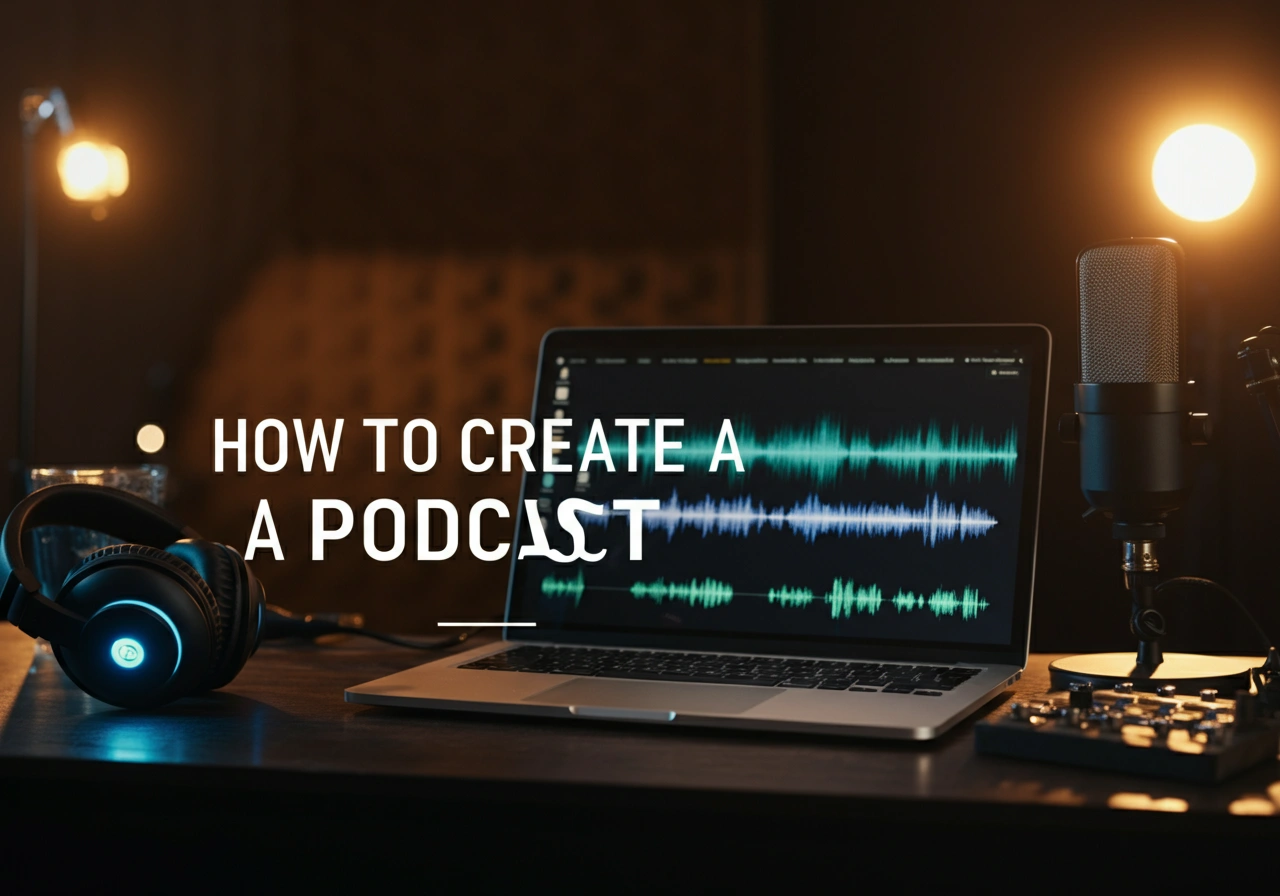
Millions of podcasts currently exist across major platforms like Apple Podcasts and Spotify. Every day, thousands of new episodes upload, vying for the same limited resource: listener attention. It might feel like the ship has sailed, or that every good topic is already taken. But saturation doesn’t mean there is no room for you. It simply means the bar for entry has raised.
Mediocrity no longer cuts it. You cannot simply turn on a microphone, chat aimlessly for an hour, and expect a loyal following. To succeed now, you need strategy, intentionality, and a distinct voice.
This guide explores exactly how to build a podcast that doesn’t just exist but thrives. We will cover how to find your specific audience, produce studio-quality sound from home, and market your show effectively to turn casual listeners into superfans.
1. Defining Your Niche and Audience
Broad appeal is the enemy of growth for new podcasts. If you try to speak to everyone, you end up speaking to no one. The most successful shows start by dominating a small, specific corner of the market before expanding.
Identify Your Ideal Listener
Create an avatar of your perfect listener. Give them a name, a job title, and a set of hobbies. Ask yourself specific questions:
- What problem keeps them up at night?
- What do they do during their commute?
- What other media do they consume?
If your podcast is about “health,” you are competing with massive media conglomerates. If your podcast is about “nutrition and recovery for amateur marathon runners over 40,” you instantly become the go-to resource for that group.
The Power of the Micro-Niche
Don’t fear being too specific. A highly engaged audience of 1,000 listeners is far more valuable to you—and potential sponsors—than 10,000 passive listeners who skip your ads and never engage on social media. Deep engagement builds communities, and communities build sustainable podcasts.
2. Crafting Your Unique Value Proposition (UVP)
Why should someone listen to your show instead of the ten others covering the same topic? This is your Unique Value Proposition (UVP). It is the promise you make to your listener about what they will gain from their time with you.
Finding Your “Only”
Fill in the blank: “This is the only podcast that…”
Maybe you are the only podcast that interviews failed startup founders instead of successful ones. Perhaps you are the only true crime show that focuses exclusively on solved cases from the 1920s.
Your UVP can come from three main areas:
- Unique Format: Do you do 5-minute episodes? Is it a fictional narrative?
- Unique Host Personality: Do you bring a specific expertise or comedic tone?
- Unique Angle: Do you challenge common industry assumptions?
Without a clear UVP, you are a commodity. With one, you are a brand.
3. High-Quality Audio Production is Non-Negotiable
In the early days of podcasting, listeners forgave bad audio. Today, poor sound quality is an immediate “off” switch. If your audience has to strain to hear you over background hiss, or if one host is significantly louder than the other, they will leave.
The Right Gear
You do not need a multi-million dollar studio, but you do need dedicated equipment. Avoid using your laptop’s internal microphone or standard earbuds.
- Microphone: Invest in a dynamic microphone (like the ATR2100x or Shure MV7). Dynamic mics pick up less background noise than condenser mics, making them ideal for home recording.
- Headphones: Always wear headphones while recording. This prevents audio bleed and lets you monitor your levels in real-time.
Controlling Your Environment
The room you record in matters more than the microphone you use. Hard surfaces bounce sound, creating echo. Recording in a kitchen or an empty office often results in “boxy” audio. Record in a carpeted room with soft furniture. If you are on a budget, recording in a closet full of clothes offers excellent sound dampening.
Editing Standards
Editing separates the amateurs from the pros. Use software like Audacity (free), GarageBand, or Adobe Audition to:
- Remove long pauses and “umms.”
- Level the volume so all speakers are consistent.
- Add an intro and outro with music that fits your tone.
4. Developing Engaging Content and Storytelling
Great audio quality will get a listener to stay for five minutes; great content keeps them coming back for five years. Even interview shows need narrative structure.
The Arc of an Episode
Think of every episode as a story. It needs a beginning (the hook), a middle (the conflict or lesson), and an end (the resolution or takeaway).
- The Hook: Do not spend the first five minutes on “housekeeping” or small talk. Start with a cold open—a fascinating quote from the guest or a provocative question—to grab attention immediately.
- The Middle: Keep the energy moving. If you are interviewing someone, don’t just ask a list of questions. Follow up on their answers. Dig for the “why” behind their stories.
- The Resolution: End with a clear summary or action item. Leave the listener feeling smarter or more entertained than when they arrived.
Preparation is Key
Never hit record without a plan. Even “conversational” podcasts need a roadmap. Create a bulleted list of topics you want to hit. This keeps the conversation focused and prevents rambling, which respects your listener’s time.
5. Branding and Marketing Strategies
You cannot rely on organic discovery within podcast apps. Apple and Spotify algorithms favor established shows. You must build a brand outside of the app to drive people into it.
Visual Identity
Your cover art is the first thing a potential listener sees. It needs to look professional even when shrunk down to the size of a postage stamp on a phone screen.
- Simplicity: Avoid clutter. Use one key image and large, legible text.
- Contrast: Use bold colors that stand out against the white or black backgrounds of podcast apps.
- Consistency: Your podcast art, website, and social media banners should all share the same color palette and fonts.
The Website Hub
Create a dedicated website for your podcast. This improves your SEO (Search Engine Optimization) significantly. Post show notes for every episode. Show notes shouldn’t just be a few lines; include a full summary, key takeaways, links mentioned, and a transcript if possible. This makes your audio content searchable by Google.
6. Leveraging Social Media and Collaborations
Growing an audience requires proactive outreach. You need to go where your listeners hang out and invite them in.
repurpose Content
Don’t just post a link to the episode and say “New episode up!” That provides no value.
- Audiograms: Create short video clips with captions (using tools like Headliner or Descript) highlighting the most interesting 60 seconds of the episode.
- Quote Graphics: Turn powerful quotes into shareable images for Instagram or LinkedIn.
- Threads/Carousels: Break down the main lesson of the episode into a Twitter thread or LinkedIn carousel.
Strategic Collaborations
Guesting on other podcasts is arguably the most effective way to grow. Why? because you are marketing to people who already listen to podcasts.
- Podcast Swaps: Find a show similar in size and niche to yours. You mention their show in your intro, and they do the same for you.
- Guest Strategy: When you interview a guest, make it incredibly easy for them to share the episode. Send them a media kit with pre-written tweets, graphics, and email copy. If they share it with their audience, your reach multiplies instantly.
7. Consistency and Long-Term Planning
Podcasting is a marathon, not a sprint. Most podcasts experience “podfade”—stopping production after 7 to 10 episodes—because the host didn’t see immediate results or underestimated the workload.
The Content Calendar
Treat your podcast like a job. Build a content calendar three months in advance. Knowing what you are recording next week removes the stress of scrambling for topics. Batch recording is a lifesaver here. Instead of recording one episode a week, spend one Saturday recording four episodes. This frees up the rest of the month for marketing and promotion.
Patience and metrics
Success takes time. Do not obsess over download numbers in the first six months. Instead, focus on retention rates (how long people listen) and engagement (are they emailing you or DMing you?).
- Ask for Reviews: Reviews on Apple Podcasts help with social proof.
- Build an Email List: Don’t build your house on rented land. Social media algorithms change. An email list gives you direct access to your listeners.
Conclusion
Creating a standout podcast in a crowded market requires more than just a microphone and an idea. It demands a strategic approach to branding, a commitment to audio excellence, and the discipline to show up consistently. By defining a clear niche, respecting your audience’s time with high-quality editing, and actively marketing your work, you move from being just another show in the directory to being a must-listen part of your audience’s week.
Start with your unique value. Focus on the listener. And keep recording.
Contents
- 1 1. Defining Your Niche and Audience
- 2 2. Crafting Your Unique Value Proposition (UVP)
- 3 3. High-Quality Audio Production is Non-Negotiable
- 4 4. Developing Engaging Content and Storytelling
- 5 5. Branding and Marketing Strategies
- 6 6. Leveraging Social Media and Collaborations
- 7 7. Consistency and Long-Term Planning