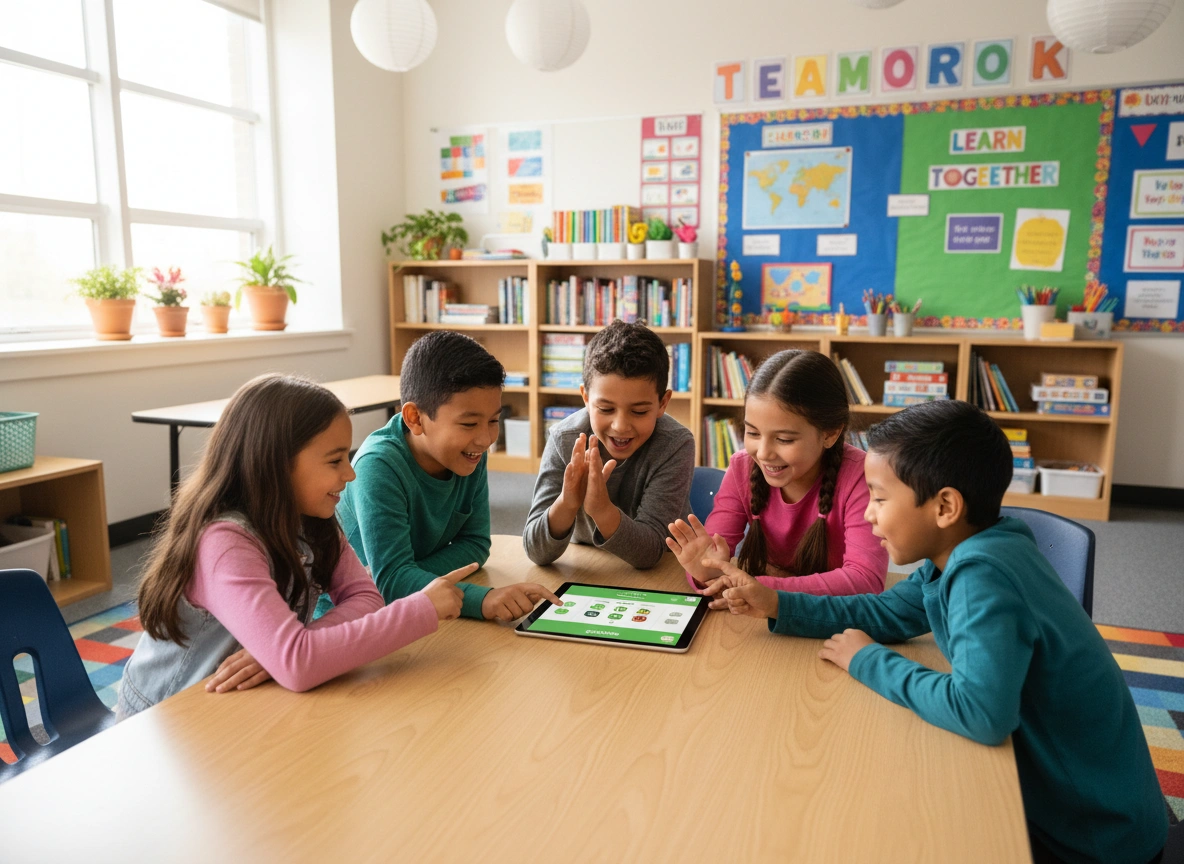
The modern classroom is undergoing a significant transformation. The traditional “sage on the stage” model, where a teacher delivers information to passive students, is rapidly being replaced by dynamic, student-centered environments. Central to this shift is the emphasis on collaboration and teamwork—skills identified as critical for success in the 21st-century workforce. Educational technology (EdTech) plays a pivotal role in facilitating this change, and among the myriad tools available, Gimkit has emerged as a standout platform for fostering genuine cooperative learning.
While many game-based learning platforms focus on individual competition and speed, Gimkit differentiates itself through unique game modes and mechanics specifically designed to require communication, strategy, and shared goals. This article explores how Gimkit moves beyond simple gamification to become a powerful engine for classroom collaboration.
Moving Beyond the Leaderboard: The Gimkit Philosophy
To understand Gimkit’s impact on teamwork, one must first look at its origins. created by a high school student, Josh Feinsilber, Gimkit was born out of a desire to make classroom review more engaging. However, unlike traditional quiz platforms that often isolate students in a race to the top of a leaderboard, Gimkit introduced an in-game economy. Students earn “money” for correct answers, which they can then reinvest in upgrades and power-ups.
This economic layer adds strategic depth. It isn’t just about knowing the answer; it’s about managing resources. When team modes are introduced, this strategic element necessitates discussion. Students must decide collectively: Do we save for a big multiplier? Do we buy insurance against wrong answers? Who should buy the “streaks” bonus? This shift from individual recall to collective resource management is the foundation of Gimkit’s collaborative power.
Key Features That Drive Teamwork
Gimkit offers several specific modes and features that turn a standard quiz into a collaborative mission.
1. Team Mode and Shared Wallets
In the classic Team Mode, students are grouped together, and their earnings are pooled into a shared team total. This simple mechanic changes the dynamic instantly. A student who struggles with the content can still contribute by being cautious and avoiding penalties, while stronger students can focus on generating income. The “shared wallet” forces students to communicate about spending. If one student spends all the team’s money on a personal upgrade without consulting the group, the team suffers. This teaches fiscal responsibility and the importance of communal decision-making.
2. “The Floor is Lava” (Cooperative Survival)
Perhaps the most potent example of collaboration is the “The Floor is Lava” mode. In this cooperative game, the entire class works together to keep a construction project above rising lava. Correct answers build the structure higher; incorrect answers or inaction let the lava rise. There are no competing teams here—it is the class versus the game. This mode eliminates inter-group rivalry and unites the entire room under a single objective. Students often shout encouragement, strategize on who should answer which questions, and celebrate collective survival.
3. “Trust No One” (Social Deduction)
Inspired by popular social deduction games like Among Us, this mode assigns students roles: crewmates or impostors. Crewmates must answer questions to run tests and identify the impostors, while impostors try to sabotage the mission without being caught. While competitive in nature, it requires intense collaboration among the crewmates. They must share information, verify alibis, and discuss observations to deduce who is working against them. It fosters critical thinking, debate, and the ability to build consensus based on evidence.
4. Tag Mode (Team Strategy)
In Tag Mode, teams compete to capture energy. However, players can be “tagged” by opponents, losing their energy. This requires players to work in formations or roles—some acting as “runners” to answer questions and gather energy, while others act as defenders or distractors. The complexity of the movement and energy management demands that students talk to each other constantly to adjust their strategy in real-time.
The Pedagogical Benefits of Collaborative Gaming
Using Gimkit for teamwork offers benefits that extend far beyond simply learning the curriculum material.
Social-Emotional Learning (SEL): Collaborative games provide a safe space to practice social skills. Students must navigate disagreements, practice active listening, and offer support to struggling peers. In high-pressure modes like “The Floor is Lava,” they learn to manage collective stress and celebrate shared victories, building a sense of classroom community.
Differentiated Roles: In a typical group project, one student often does all the work. In Gimkit’s team modes, the rapid pace and diverse mechanics allow for natural differentiation. A student who is quick at math might handle the answering, while a student with good leadership skills manages the upgrades shop. Everyone has a valuable role to play, boosting confidence for students who might usually disengage.
Communication Skills: You cannot win a team game of Gimkit in silence. The platform necessitates verbal communication. Students must articulate their strategies clearly and quickly. “Buy the multiplier now!” or “Don’t answer yet, we need to save up!” are common refrains. This practice in clear, goal-oriented communication is invaluable.
Peer Teaching: When a team is penalized for a wrong answer, there is a natural incentive for teammates to correct misconceptions. Unlike a teacher correction, which can sometimes feel punitive, peer correction in the heat of a game is often received as helpful coaching. Students explain the correct answer to their teammates so they can get it right the next time and help the team win.
Real-World Classroom Applications
Teachers across various subjects can leverage these collaborative features effectively.
- Foreign Language: In a Spanish class, a teacher could use Team Mode for vocabulary review. Students must discuss which upgrades to buy in the target language, reinforcing conversational skills alongside vocabulary recall.
- Mathematics: “The Floor is Lava” is excellent for math drills. Since speed and accuracy are crucial to keeping the construction above the lava, the entire class is motivated to focus intensely on solving problems. The shared goal reduces math anxiety, as the burden of success is distributed across the group.
- History/Social Studies: The “Trust No One” mode can be adapted for historical roleplay. For example, during a unit on the Cold War, the mechanics of investigation and suspicion perfectly mirror the historical themes of espionage and paranoia, making the emotional context of the era tangible for students.
- Science: During a unit on ecosystems, teachers can use Tag Mode to simulate resource competition. Teams represent different species competing for energy, helping students visualize concepts of survival and niche competition through gameplay.
Challenges and Considerations
While Gimkit is a powerful tool, it is not without challenges. Teachers must be proactive to ensure the collaboration remains positive.
The “Alpha Gamer” Problem: In any team setting, a dominant personality can take over. In Gimkit, one student might dictate all spending decisions or shout down others. Teachers need to monitor groups and encourage quieter students to take control of the “shop” or leadership roles.
Over-Excitement: The gamified nature of Gimkit induces high energy. While engagement is good, it can sometimes devolve into chaos or excessive noise. Establishing ground rules for volume levels and respectful communication before the game starts is essential.
Tech Disparities: Collaborative modes rely on every student having a device. If the Wi-Fi is unstable or devices are scarce, the flow of the game—and the collaboration—breaks down. Teachers should have a backup plan or use “Station Rotation” models where only one group plays at a time if devices are limited.
Tips for Maximizing Collaboration
To get the most out of Gimkit as a team-building tool, educators should consider the following strategies:
- Intentional Grouping: Do not always let students pick their friends. Use random grouping or strategic mixed-ability grouping to force students to collaborate with peers they might not usually interact with. This mimics real-world workplaces where one must work with diverse teams.
- Debriefing Sessions: The most valuable learning often happens after the game. Take five minutes to debrief. Ask questions like: “What was your team’s strategy?”, “How did you decide who bought upgrades?”, or “What would you do differently next time?” This metacognitive reflection solidifies the lessons on teamwork.
- Rotate Roles: Explicitly assign roles within the Gimkit teams. Tell one student they are the “Financial Advisor” (in charge of upgrades) and another they are the “Quality Control” (checking answers). Rotate these roles in subsequent rounds.
- Low-Stakes Practice: Introduce new game modes with “fun” trivia content first. Let students learn the mechanics of collaboration without the stress of being graded on academic content simultaneously. Once they understand how to work together, introduce the curriculum material.
Conclusion
Gimkit has successfully carved out a niche in the EdTech landscape by recognizing that learning is inherently social. By designing game modes that reward interdependence rather than just individual speed, the platform transforms the classroom into a collaborative workspace.
When students play Gimkit together, they are doing more than reviewing facts; they are negotiating, strategizing, leading, and supporting one another. In an educational landscape that increasingly values soft skills alongside academic knowledge, tools like Gimkit provide a vital bridge, proving that the most effective way to learn is often together. As technology continues to evolve, the platforms that prioritize human connection and collective problem-solving will remain the most enduring assets in a teacher’s toolkit.
Please click here for more info