Capturing and holding the attention of learners remains one of the greatest challenges for educators and corporate trainers alike. Traditional assessments often cause anxiety and disengagement. However, interactive platforms have changed how we evaluate knowledge. You can transform standard tests into exciting learning opportunities by combining thoughtful question design with the right technological tools.
This guide explores exactly how to maximize your assessment strategies. Whether you teach middle school science or lead corporate compliance training, you will discover actionable techniques to make learning stick. We will walk through the core features of the platform, share strategies for writing compelling questions, explain the strategic use of multimedia, and show you how to read the data to improve your future instruction.
Here is what you will take away from this guide:
- A deep understanding of how interactive assessment platforms function.
- Practical rules for writing questions that challenge rather than confuse.
- Creative ways to incorporate images and audio to enhance retention.
- Methods to use gamification to spark healthy competition.
- Techniques for turning post-quiz data into actionable teaching steps.
Understanding the Assessment Platform
Before diving into content creation, you must understand the environment where your learners will interact. The platform allows you to build self-paced, gamified assessments that participants can access from any device. Unlike traditional instructor-led games where the whole room must wait for the slowest answer, this system lets participants progress at their own speed.
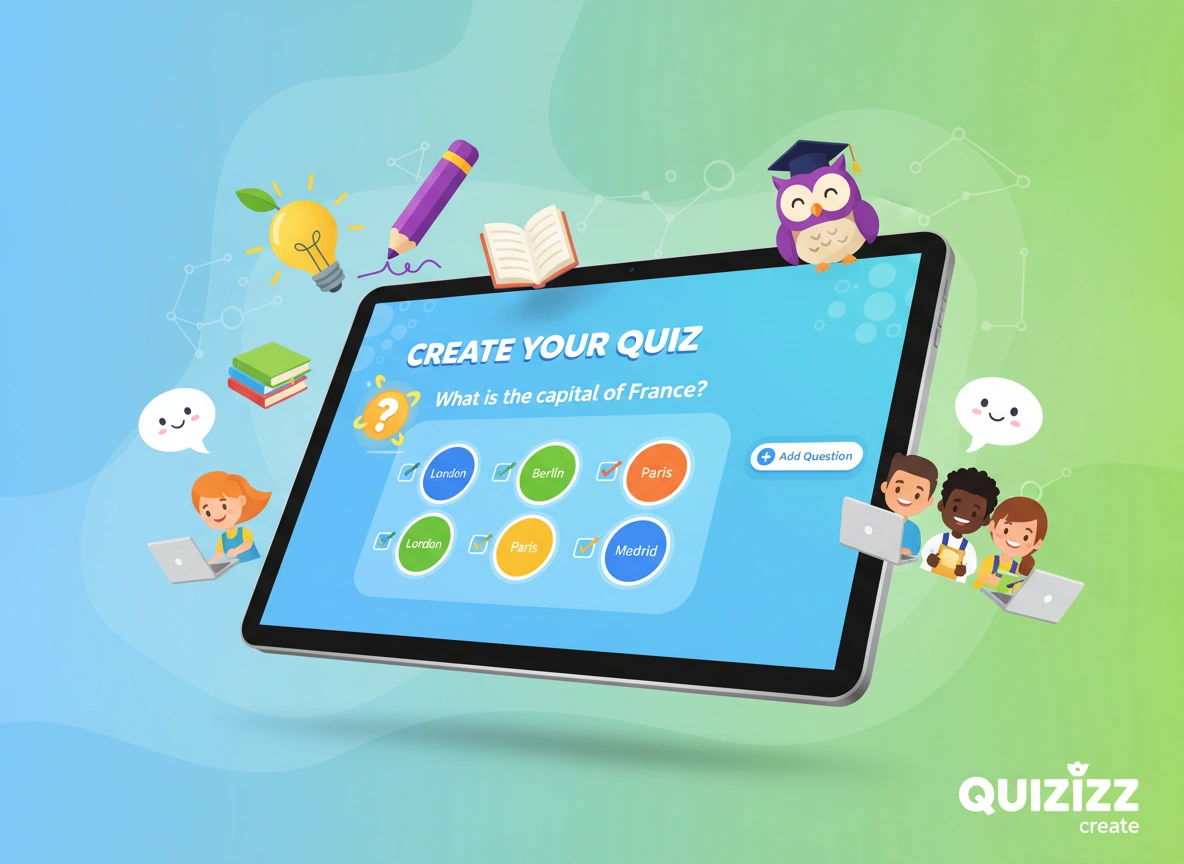
When you set up an account on quizizz, you gain access to a massive library of user-generated content alongside robust creation tools. You can host games live during a session or assign them as asynchronous homework. This flexibility makes it highly adaptable to almost any learning environment, from hybrid classrooms to remote corporate workshops.
The magic lies in the interface. Learners see both the question and the answer choices on their own screens, eliminating the need to squint at a projector at the front of the room. This personalized viewing experience reduces cognitive load and allows the learner to focus entirely on recalling the correct information.
Tips for Crafting Engaging Questions
The foundation of any successful assessment is the quality of its questions. A visually stunning game falls flat if the content confuses the learners or fails to test the actual learning objectives. Writing good questions requires a balance of clarity, challenge, and variety.
Mix Your Question Types
Relying solely on standard multiple-choice questions quickly leads to fatigue. Mix up your formatting to keep learners on their toes. Use fill-in-the-blank options to test precise recall of vocabulary terms. Try checkbox questions when a scenario requires identifying multiple correct factors. You can also include open-ended questions for subjective topics where you want learners to express their reasoning, though these require manual review later.
Keep the Text Concise
Readability is paramount. Participants usually face a timer, so long, winding paragraphs cause unnecessary panic. Cut the fluff. Ask the question directly and ensure your answer choices are brief. If a question requires a long scenario, break it down into bullet points or present the scenario once and ask a series of shorter questions related to it.
Design Plausible Distractors
The incorrect choices in a multiple-choice question—known as distractors—matter just as much as the correct answer. If your distractors are too obvious or silly, you fail to measure true understanding. Use common misconceptions as your incorrect options. This forces learners to think critically and helps you identify exactly where their understanding breaks down.
Bringing Questions to Life with Multimedia
Text-only assessments often feel dry and monotonous. Humans are visual creatures, and we process imagery much faster than words. Integrating multimedia elements into your assessments not only boosts engagement but also supports different learning styles.
Use Images for Context and Clues
Instead of describing a complex process or historical event in a paragraph of text, insert a relevant image. For geography, use maps. For science, include diagrams of cells or chemical structures. You can also use images simply to set a mood or inject humor into the assessment. A funny reaction GIF related to the subject matter provides a quick mental break between rigorous academic questions.
Incorporate Audio for Accessibility and Language Learning
Audio features represent a massive advantage for language teachers, music instructors, and educators working with younger students who are still developing reading skills. You can record yourself reading the question aloud, ensuring that reading comprehension issues do not interfere with testing subject knowledge. For foreign language classes, audio clips allow you to test listening comprehension effectively.
Embed Video for Scenario-Based Learning
Short video clips work incredibly well for corporate training and social studies. You can show a 30-second clip of a customer service interaction, pause it, and ask learners to identify the mistake the employee made. Video transforms a theoretical concept into a tangible, real-world application.
Leveraging Built-in Gamification Features
Gamification takes standard assessment and wraps it in the psychological triggers of play. By activating these features, you turn a stressful test into an enjoyable challenge.
Enable Power-Ups Carefully
Power-ups give learners special abilities, such as immunity from a wrong answer or a time-freeze. These mechanics add a layer of strategy that students love. However, consider your objective. For a highly rigorous summative assessment, you might want to turn power-ups off to get a pure measure of knowledge. For a formative review game, leave them on to maximize fun.
Utilize Redemption Questions
Mistakes happen, especially when participants rush to beat a timer. The redemption question feature allows learners to re-attempt a question they previously missed at the end of the game. This simple mechanic shifts the focus from penalizing failure to encouraging mastery. It teaches resilience and ensures they interact with the correct information one last time.
Customize Memes for Immediate Feedback
After a participant answers a question, the platform displays a meme before moving to the next screen. The system provides default meme sets, but creating your own adds a deeply personal touch. Teachers can use pictures of their classroom pet, inside jokes from the semester, or subject-specific humor. This micro-feedback keeps the mood light, even when the material is challenging.
Analyzing Results to Improve Learning
Creating the assessment is only the first half of the process. The real power of digital assessment tools lies in the data they generate. Waiting until the end of a unit to find out learners are confused wastes valuable time. Immediate data allows for immediate correction.
Reviewing the Overall Class Accuracy
As soon as the session ends, look at the overall accuracy percentage. If the group scored an average of 85%, they likely grasped the core concepts. If the average drops below 60%, you know immediately that your previous instruction did not stick. This big-picture metric tells you whether you can move on to the next topic or if you need to schedule a review session for the next day.
Identifying the Toughest Questions
The platform breaks down performance question by question. Look for the items that had the lowest success rates. If 70% of your learners chose the exact same incorrect distractor, you have uncovered a shared misconception. Address this specific question directly during your next meeting. Explain why that particular distractor was wrong to clear up the confusion.
Tracking Individual Progress
Some learners will master the material immediately, while others will struggle. The detailed reporting allows you to see exactly who needs extra help and where their gaps lie. You can use this data to form small instructional groups. Give the high-achieving students an enrichment task while you pull the struggling learners aside for targeted remediation based on the specific questions they missed.
Conclusion
Building interactive, impactful assessments takes practice, but the return on investment is massive. When you move away from static worksheets and embrace dynamic digital environments, you reduce test anxiety and foster a genuine excitement for learning.
Start small. Take one of your existing quizzes and migrate it into the platform. Add a few relevant images, clean up your distractors, and turn on the gamification features. Watch how your learners react to the immediate feedback and friendly competition. As you review their performance data, you will realize that you have not just created a fun game—you have unlocked a clearer, more precise view of exactly what your audience understands.