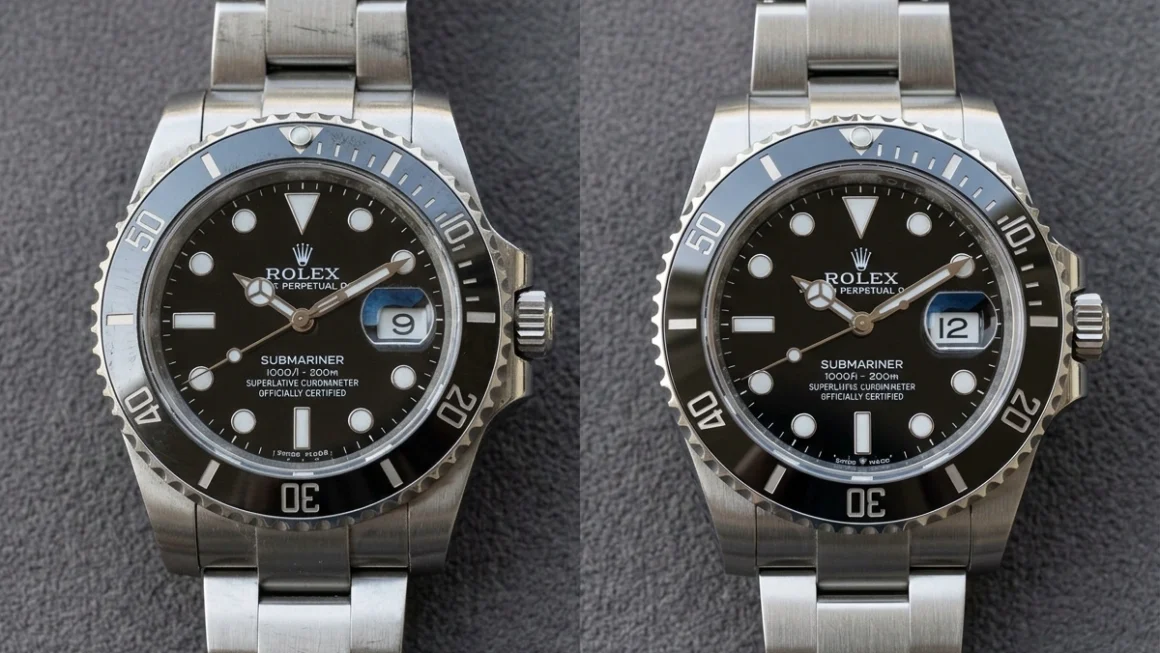
The Rolex Submariner is one of the most counterfeited watches on the planet. Modern replicas have become so convincing that even seasoned collectors pause before making a call. If you’re shopping the secondhand market, a single overlooked detail can cost you thousands.
This guide walks you through the practical checks that separate a genuine Submariner from a high-quality copy. You’ll learn how to assess weight, materials, dial precision, bezel alignment, movement behavior, and the documentation that should accompany any authentic piece. By the end, you’ll have a clear inspection routine you can use before any purchase.
Why Authentication Matters More Than Ever
Counterfeiters have closed the gap on the obvious tells. Cheap fakes with misspelled text and rattling bracelets are easy to dismiss. The dangerous ones are “super clones” that replicate weight, finishing, and even movement decoration.
Because of this, no single test is enough. Authentication works best as a layered process. The more checkpoints a watch passes, the higher your confidence. Below are the areas that matter most.
Check the Weight and Feel
A genuine Submariner carries serious heft. Rolex uses 904L stainless steel (now branded Oystersteel), which is denser and more corrosion-resistant than the 316L steel many replicas use.
- A real stainless Submariner feels solid and balanced in the hand.
- Many fakes feel lighter or unevenly weighted.
- Be cautious: top-tier clones now add ballast to mimic the weight, so never rely on this test alone.
Weight is a useful first impression, not a verdict.
Inspect the Dial and Text
The dial reveals more than almost any other component. Rolex applies its markers, text, and printing with extreme precision.
What to Look For
- Crisp printing: Text should be sharp with clean edges. Smudging, uneven spacing, or fuzzy lettering are red flags.
- Coronet logo: The crown at 12 o’clock should be symmetrical and finely detailed.
- Color and depth: The dial should have a deep, even finish with no graininess.
Common Mistakes Counterfeiters Make
Misaligned text, slightly wrong font weight, and incorrect spacing between letters are frequent giveaways. Compare the dial against high-resolution reference images of the exact model and year you’re considering.
Examine the Cyclops Magnification
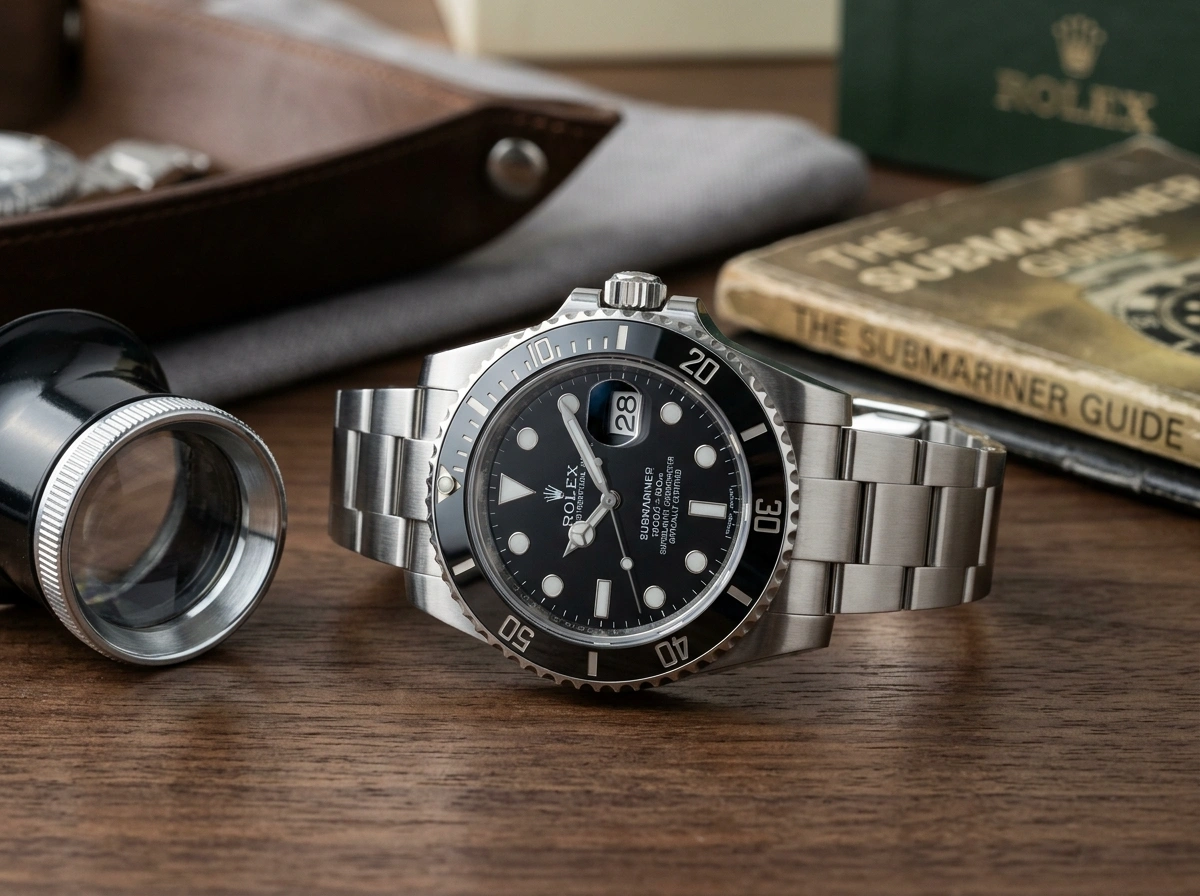
The cyclops lens over the date is a classic checkpoint. On a genuine Submariner, it magnifies the date roughly 2.5 times, filling the lens almost completely.
Many fakes use weaker magnification, leaving the date looking small and floating. The date should also be centered and easy to read at a glance. A poorly aligned or under-magnified date is a strong warning sign.
Study the Bezel Alignment and Action
The unidirectional rotating bezel should turn with a smooth, precise click—120 distinct clicks per full rotation on modern models.
- Alignment: The pearl at the top should sit perfectly centered over the 12 o’clock marker.
- Action: Rotation should feel firm and deliberate, never loose or gritty.
- Insert finish: Ceramic Cerachrom bezels have a glossy, scratch-resistant surface with razor-sharp engraved numerals.
Fakes often show a slightly off-center pearl, sloppy clicks, or numerals that look painted rather than engraved and lume-filled.
Listen to and Observe the Movement
The movement is where many replicas finally fail. A genuine Submariner uses an automatic in-house caliber with a smooth sweeping seconds hand.
- The seconds hand should glide, not tick. A visible step-by-step motion suggests a quartz or low-grade mechanical movement.
- Look through the caseback only if the watch is open; Submariners have solid casebacks, so any display back is an immediate red flag.
Be aware that high-end clones now use Swiss-style automatic movements with their own sweep. Combine this check with others rather than treating it as proof.
Verify Serial and Reference Numbers
Every authentic Submariner carries a serial number and reference number engraved with laser precision.
- On modern models, the serial sits on the rehaut (inner bezel ring) at the 6 o’clock position, alongside repeated “ROLEX” engravings.
- Engravings should be sharp, evenly spaced, and slightly reflective—never shallow or sandblasted-looking.
- Cross-reference the numbers with the model’s known production years. A mismatch between serial range and design features signals a problem.
For deeper reference checks and side-by-side comparisons, resources dedicated to identifying a fake rolex submariner can help you confirm the small details that matter.
Assess the Bracelet and Clasp Finishing
Rolex finishing is a benchmark in the industry. The Oyster bracelet should feel substantial with tight, even tolerances.
Key Details
- Clasp engraving: The crown logo on the clasp should be clean and well-defined.
- Link movement: Links should articulate smoothly without sharp edges or rattling.
- Glidelock or Easylink systems: These extension mechanisms operate precisely on genuine pieces and often feel flimsy on copies.
Run your fingers along the bracelet edges. Real Rolex bracelets are smooth; many fakes leave rough or sharp transitions.
Evaluate the Lume Quality
Rolex uses Chromalight, which glows a distinct blue and lasts for hours in the dark.
- Apply a strong light, then move the watch into darkness.
- Genuine lume is bright, even, and long-lasting.
- Fakes often glow green, fade quickly, or show patchy application across the markers and hands.
Judge Seller Credibility and Documentation
The watch matters, but so does the source. A trustworthy seller reduces your risk significantly.
Questions to Ask
- Can the seller provide the original box, warranty card, and purchase receipt?
- Is there a verifiable transaction history or established reputation?
- Will they allow inspection by an independent watchmaker before payment?
Authentic paperwork should match the watch’s serial and reference numbers. Be cautious of sellers who rush you, avoid in-person meetings, or refuse third-party verification.
Common Red Flags to Watch For
Keep this shortlist in mind during any inspection:
- Ticking instead of sweeping seconds
- Weak or off-center cyclops magnification
- Misaligned bezel pearl
- Fuzzy or misspelled dial text
- A display caseback on a Submariner
- Lume that glows green or fades fast
- Prices far below market value
- Missing or mismatched documentation
A single red flag warrants a pause. Several together mean you should walk away.
Your Pre-Purchase Inspection Checklist
Before you buy, confirm each of these:
- Weight feels solid and balanced
- Dial printing is sharp and symmetrical
- Cyclops magnifies the date around 2.5x
- Bezel pearl is centered with crisp clicks
- Seconds hand sweeps smoothly
- Serial and reference engravings are precise and consistent
- Bracelet and clasp finishing is clean
- Lume glows bright blue and lasts
- Seller is reputable and allows inspection
- Documentation matches the watch
Conclusion
Spotting a high-quality fake Submariner comes down to discipline, not luck. No single detail proves authenticity, but a layered inspection—covering weight, dial, bezel, movement, engravings, finishing, and paperwork—builds reliable confidence.
Take your time, compare against verified references, and never let urgency override your checklist. When the stakes are this high, a careful inspection is your best protection. Use the checklist above on your next purchase, and consider an independent watchmaker’s review before any significant payment.
Contents
- 1 Why Authentication Matters More Than Ever
- 2 Check the Weight and Feel
- 3 Inspect the Dial and Text
- 4 Examine the Cyclops Magnification
- 5 Study the Bezel Alignment and Action
- 6 Listen to and Observe the Movement
- 7 Verify Serial and Reference Numbers
- 8 Assess the Bracelet and Clasp Finishing
- 9 Evaluate the Lume Quality
- 10 Judge Seller Credibility and Documentation
- 11 Common Red Flags to Watch For
- 12 Your Pre-Purchase Inspection Checklist
- 13 Conclusion