
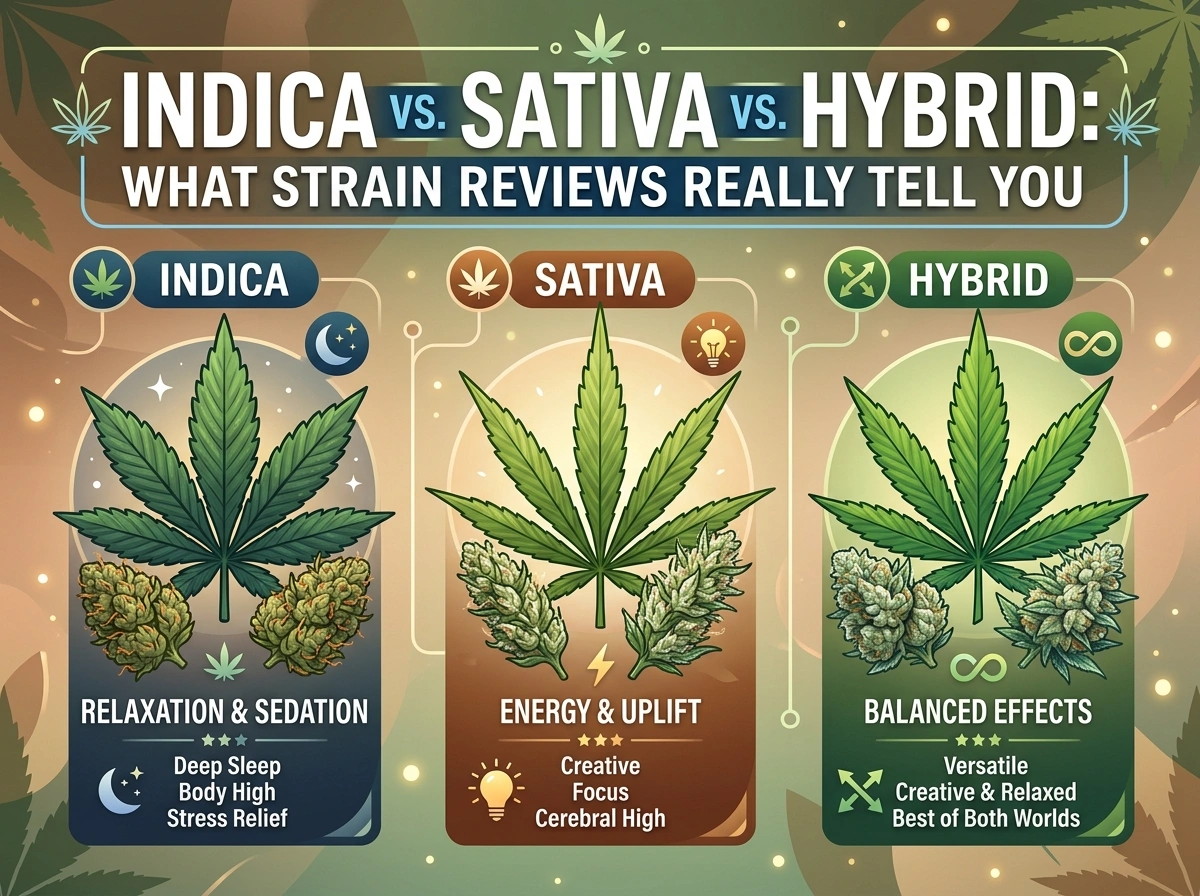
Walk into any dispensary from California to Massachusetts, and you’ll face the same three labels: Indica, Sativa, and Hybrid. Budtenders use them. Packaging displays them. Online menus sort by them. But here’s the catch—those three words tell you far less than most people assume. If you’ve ever bought an “energizing Sativa” only to feel like melting into your couch, you already know the labels can mislead.
This guide breaks down what these categories actually mean, what honest strain reviews reveal beyond the marketing, and how to use real user feedback to pick products that match how you want to feel. By the end, you’ll shop smarter and waste less money on flower that doesn’t fit your goals.
The Basics: What Indica, Sativa, and Hybrid Actually Mean
The Indica/Sativa split started as botany, not a buying guide. Originally, these terms described the physical shape of the cannabis plant—not the effects you’d feel.
Indica
Cannabis indica plants tend to be short, bushy, and broad-leafed. In dispensary shorthand, “Indica” became code for relaxing, sedating, body-focused effects—the classic “in-da-couch” experience. People often reach for these strains in the evening, for winding down, or to help with sleep.
Sativa
Cannabis sativa plants grow tall and lanky with narrow leaves. The marketing version of “Sativa” promises uplifting, cerebral, energizing effects—great for daytime use, creativity, or socializing. That’s the reputation, anyway.
Hybrid
Most strains on the market today are hybrids, meaning they’re crossbred from both lineages. Sellers label them “Indica-dominant,” “Sativa-dominant,” or “balanced” to suggest where they land on the spectrum. In reality, decades of crossbreeding mean nearly every modern strain carries mixed genetics.
Key takeaway: These categories describe plant structure and rough expectations—but they’re a starting point, not a guarantee of how a product will affect you.
What Strain Reviews Actually Reveal
Here’s where real user feedback earns its value. A label tells you a marketing category. A detailed review tells you what actually happened when someone consumed it. Quality strain reviews capture the nuances that packaging never could.
Effects and Onset
Good reviews describe the arc of the experience—how fast effects hit, how long they last, and how they shift over time. One person might note a quick mental lift that settles into calm focus. Another might warn that the same strain crept up slowly and left them couch-locked. These first-hand accounts paint a far more useful picture than a single word on a jar.
Potency
Reviews often reference THC and CBD percentages, but the more helpful ones describe felt potency. A 28% THC flower might overwhelm a casual user while barely touching a daily consumer. When dozens of reviewers say a strain “hits harder than the numbers suggest,” that pattern matters.
Flavor and Aroma
Taste and smell come from terpenes—aromatic compounds like myrcene, limonene, and pinene that also shape effects. Reviewers describe notes like citrus, pine, diesel, or earthy spice. If flavor matters to you, consistent comments about a strain’s profile help you predict whether you’ll enjoy it.
Real User Experience
The best reviews go beyond effects and flavor. They mention context: time of day, dose, tolerance level, and what the consumer used it for. A note like “perfect for a Sunday hike but too much before a work meeting” gives you practical guidance no label can match.
How to Interpret and Use Strain Reviews as a Consumer
Reading reviews well is a skill. Here’s how to get the most from them.
Look for Patterns, Not Outliers
One glowing or scathing review proves little. Scan for repeated themes across many reviewers. If 40 people independently mention “great for anxiety” or “made me too jittery,” that consensus is signal. A lone five-star rave or one-star rant is noise.
Match Reviews to Your Goals
Before reading, get clear on what you want—better sleep, daytime focus, pain relief, or social ease. Then filter reviews through that lens. A strain praised as “energizing and talkative” is perfect for a party and wrong for bedtime.
Factor in Your Own Tolerance
Cannabis affects everyone differently based on body chemistry, tolerance, and experience. A “mild” strain to a veteran user might floor a newcomer. Weight reviews from people whose habits resemble yours.
Note the Terpenes and Cannabinoids
When a product lists its terpene profile or full cannabinoid breakdown, pair that data with the reviews. Over time, you’ll learn which compounds suit you—maybe limonene-heavy strains lift your mood, while myrcene-dominant ones knock you out. That self-knowledge beats any category label.
Common mistake: Trusting the Indica/Sativa label over the lived experiences of dozens of real users. The crowd usually knows more than the jar.
The Limitations of the Indica/Sativa/Hybrid System
The biggest secret in cannabis retail? Many scientists and experts consider the Indica/Sativa framework outdated for predicting effects.
Genetics Are Hopelessly Mixed
After generations of crossbreeding, the genetic line between Indica and Sativa has blurred almost beyond recognition. A strain marketed as “pure Indica” may share more DNA with so-called Sativas than its label implies. The names persist mostly out of habit and marketing convenience.
Effects Come From Chemistry, Not Category
Research increasingly points to cannabinoids and terpenes—not Indica or Sativa lineage—as the real drivers of how a strain feels. Two “Sativas” can produce opposite experiences if their chemical profiles differ. This is why the same label can disappoint you twice in different ways.
The Same Name, Different Products
Strain names aren’t regulated consistently across states. “Blue Dream” grown in Colorado may test differently from “Blue Dream” in Oregon due to growing conditions, harvest timing, and cultivation practices. Even within one brand, batches vary. A review tied to a specific grower and batch carries more weight than a generic strain name alone.
Why This Matters for You
Because the classification system is shaky, your best tools are real-world data and your own tracking. Note what you buy, how it made you feel, and which terpene or cannabinoid profiles you enjoyed. Combine that personal log with community reviews, and you’ll outperform the label every time.
Key takeaway: Treat Indica, Sativa, and Hybrid as loose hints—then let chemistry and crowd-sourced reviews do the heavy lifting.
Putting It All Together: A Smarter Shopping Approach
Ready to apply this? Use this quick mental checklist next time you shop:
- Define your goal first—sleep, focus, relief, or fun.
- Skim past the label and head straight to the reviews.
- Hunt for patterns across many reviewers, not single opinions.
- Check the chemistry—terpenes and cannabinoid percentages.
- Match reviewers to yourself—similar tolerance and intent.
- Track your results so each purchase teaches you something.
This approach turns guesswork into a repeatable system. Instead of gambling on a category, you make decisions backed by real evidence.
Conclusion
Indica, Sativa, and Hybrid will keep dominating dispensary menus for years to come—they’re simple, familiar, and easy to market. But now you know the truth: those three words are a rough map, not the territory. The real intelligence lives in the chemistry of each product and in the honest experiences of people who’ve already tried it.
When you learn to read strain reviews critically—spotting patterns, weighing terpenes, and matching feedback to your own goals—you stop relying on outdated labels and start making informed choices. That’s how you find products that actually deliver the experience you’re after.
Your next step: Before your next purchase, pull up detailed reviews for the strain you’re considering, look for the patterns that match your goals, and keep a simple log of what works. Shop with data, not just labels—your future self will thank you.
