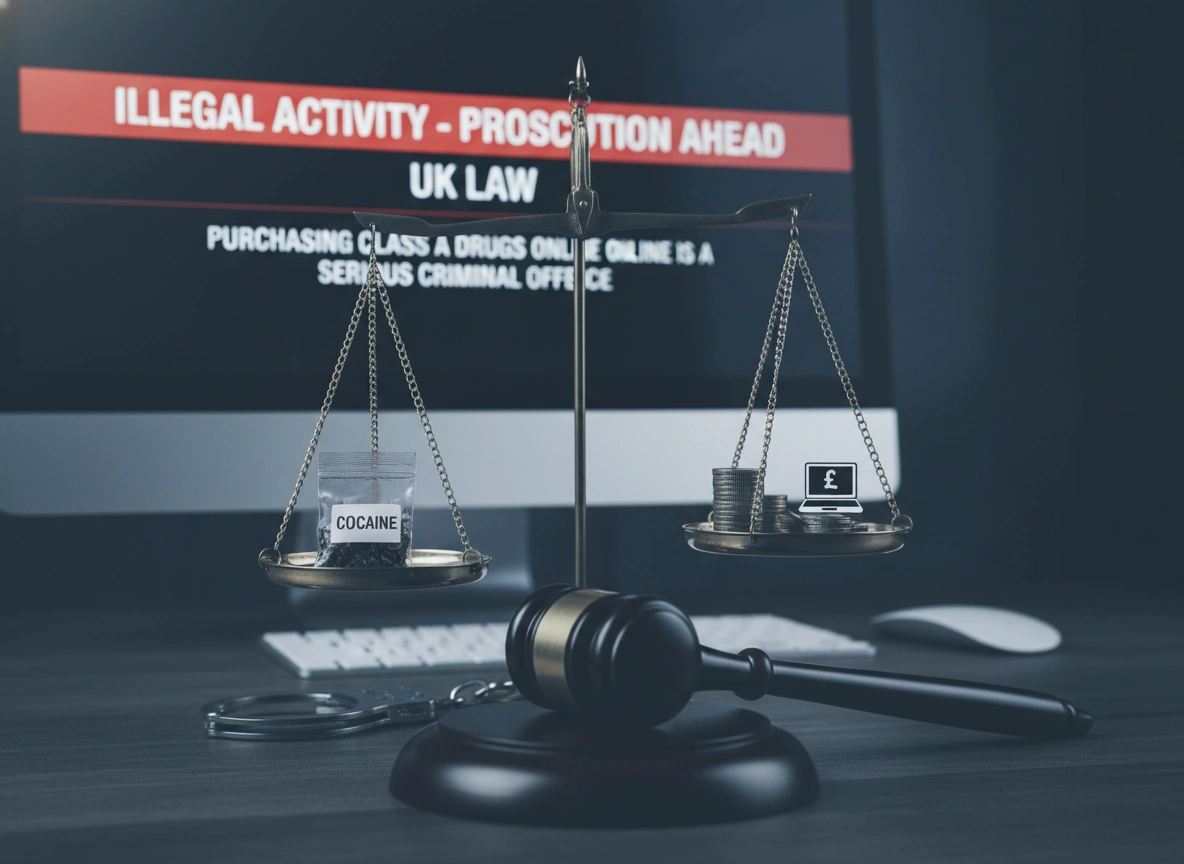
The internet provides access to almost anything, leading some individuals to believe that the anonymity of a screen protects them from the law. This assumption proves disastrous when it comes to illicit substances. The United Kingdom enforces some of the strictest drug policies in the world. Purchasing a Class A drug through digital channels does not shield buyers from these laws; rather, it often exposes them to more severe charges.
This article explores the direct legal consequences of acquiring cocaine via the internet in the UK. We will examine the framework of the Misuse of Drugs Act 1971, breakdown the differences between possession and importation charges, highlight modern police enforcement tactics, and discuss the technical vulnerabilities of these transactions. Ultimately, you will understand how a single online purchase can result in a permanent criminal record and significant prison time.
The Misuse of Drugs Act 1971 and Class A Classification
To understand the penalties involved, you first need to understand how the UK categorizes controlled substances. The Misuse of Drugs Act 1971 serves as the primary legislation governing illegal drugs in the country. Under this act, drugs are divided into three categories: Class A, Class B, and Class C.
Cocaine holds a Class A classification. This category represents the drugs that the government considers the most harmful to individuals and society. Because of this high-risk classification, offenses related to cocaine carry the maximum possible penalties under British law. The law makes no distinction between buying drugs on a street corner and buying them through an encrypted browser. If you attempt to Buy Cocaine Online UK, you immediately subject yourself to the severe prosecutorial weight of a Class A drug offense.
Importation vs. Possession: Understanding the Charges
When authorities intercept an online drug purchase, the resulting charges often surprise the buyer. Many people assume they will only face a simple possession charge. However, the nature of online purchasing frequently elevates the crime to a much more serious offense.
The Severe Reality of Importation Charges
If you purchase cocaine from a website or dark web vendor hosted outside of the United Kingdom, the drugs must cross international borders to reach your address. The moment that package enters the UK, the crime escalates from possession to the improper importation of a controlled substance.
The Customs and Excise Management Act 1979 works alongside the Misuse of Drugs Act to prosecute importation offenses. The penalties for importing a Class A drug are staggering. If convicted of importing cocaine, an individual faces up to life in prison, an unlimited fine, or both. Even for a small quantity intended for personal use, prosecutors often pursue importation charges because the act of bringing the drug across the border violates customs laws. Judges regularly hand down immediate custodial sentences (prison time) to deter others from using the postal system for drug trafficking.
Penalties for Possession
If the online vendor operates within the UK, avoiding border crossings, the buyer still faces charges for possession of a Class A drug. While possession carries lower maximum sentences than importation, the consequences remain severe.
The maximum penalty for possession of a Class A drug is up to seven years in prison, an unlimited fine, or both. First-time offenders caught with very small amounts might receive a community order or a heavy fine, but a prison sentence remains a highly possible outcome. The courts view the deliberate act of seeking out and ordering drugs online as a premeditated action, which can negatively influence sentencing.
Police Enforcement Tactics and Cybercrime Units
A common misconception regarding online drug purchases is that the dark web and cryptocurrencies provide total anonymity. In reality, UK law enforcement agencies possess highly advanced tools to track, intercept, and prosecute digital drug buyers.
Intercepting Mail and Border Force Operations
The most common point of failure for online drug transactions happens in the physical world. UK Border Force officers and Royal Mail staff use sophisticated screening techniques to identify suspicious packages. They deploy X-ray machines, chemical trace detectors, and specialized sniffer dogs at postal hubs across the country.
When authorities intercept a package containing cocaine, they do not simply discard it. Instead, they often initiate a “controlled delivery.” Police officers, sometimes posing as postal workers, deliver the package to the buyer’s address. Once the buyer accepts the package, police execute a search warrant, arrest the individual, and seize their digital devices for forensic analysis.
Advanced Digital Forensics
The National Crime Agency (NCA) and regional cybercrime units aggressively monitor dark web marketplaces and online forums. When authorities shut down an illicit marketplace, they often seize the site’s servers. These servers contain massive databases of transaction histories, buyer messages, and unencrypted delivery addresses.
Furthermore, blockchain analysis allows investigators to trace cryptocurrency payments. While Bitcoin and similar currencies offer pseudonymous transactions, they utilize public ledgers. Police use sophisticated software to trace the flow of funds from an illegal marketplace back to the buyer’s personal cryptocurrency wallet or exchange account. Once they link a digital wallet to a real-world identity, the buyer faces imminent arrest.
The Technical Risks of Online Transactions
Beyond the direct threat of police action, buying cocaine online exposes individuals to significant technical and financial risks. The digital underworld operates entirely outside the boundaries of consumer protection laws.
First, buyers face a high risk of financial fraud. Scam websites frequently pose as legitimate vendors, taking cryptocurrency payments and never shipping a product. Because the transaction involves illegal goods, the buyer has no legal recourse to recover their stolen funds.
Second, buyers compromise their personal data. Providing a home address and financial details to an illegal enterprise creates severe vulnerabilities. Hackers frequently breach these illicit databases, stealing buyer information and using it for identity theft, extortion, or blackmail. Criminals know that individuals buying drugs online will not report extortion to the police, making them ideal targets.
The Long-Term Impact of a Criminal Record
The consequences of buying cocaine online extend far beyond the courtroom and the prison cell. A conviction for a Class A drug offense results in a permanent criminal record, which fundamentally alters the trajectory of a person’s life.
Employment and Career Prospects
A drug conviction severely limits employment opportunities. Most employers in the UK require background checks, and a conviction for a Class A drug offense serves as an immediate red flag. Professions in healthcare, education, finance, law, and civil service usually bar individuals with serious drug convictions. Even in less regulated industries, employers frequently choose candidates without a criminal history.
Travel Restrictions
Having a criminal record for a drug offense severely restricts international travel. Many countries, including the United States, Australia, and Canada, maintain strict immigration policies regarding foreign nationals with drug convictions. A conviction for possessing or importing cocaine often results in an automatic lifetime ban on entering these countries, ruining personal travel plans and international business opportunities.
Financial and Social Repercussions
Banks and financial institutions sometimes refuse services to individuals convicted of serious crimes, particularly those involving international trafficking or money laundering. Securing a mortgage or a business loan becomes incredibly difficult. Furthermore, the social stigma of a Class A drug conviction strains personal relationships, damages reputations, and causes lasting psychological distress.
Conclusion
The digital landscape offers a false sense of security for illicit activities. Purchasing cocaine online in the UK constitutes a severe criminal offense with life-altering consequences. Law enforcement agencies maintain sophisticated surveillance networks, and Border Force officers routinely intercept illegal postal packages.
The legal distinction between possession and importation means that a simple online order can easily trigger charges carrying up to life in prison. Beyond the immediate threat of incarceration, a Class A drug conviction leaves a permanent scar on an individual’s record, destroying career prospects and severely limiting personal freedoms. Understanding the strict framework of the Misuse of Drugs Act 1971 and the modern tactics used by the National Crime Agency makes one thing absolutely clear: the legal and personal risks of buying illegal drugs online far outweigh any perceived convenience.
